Battery Repair
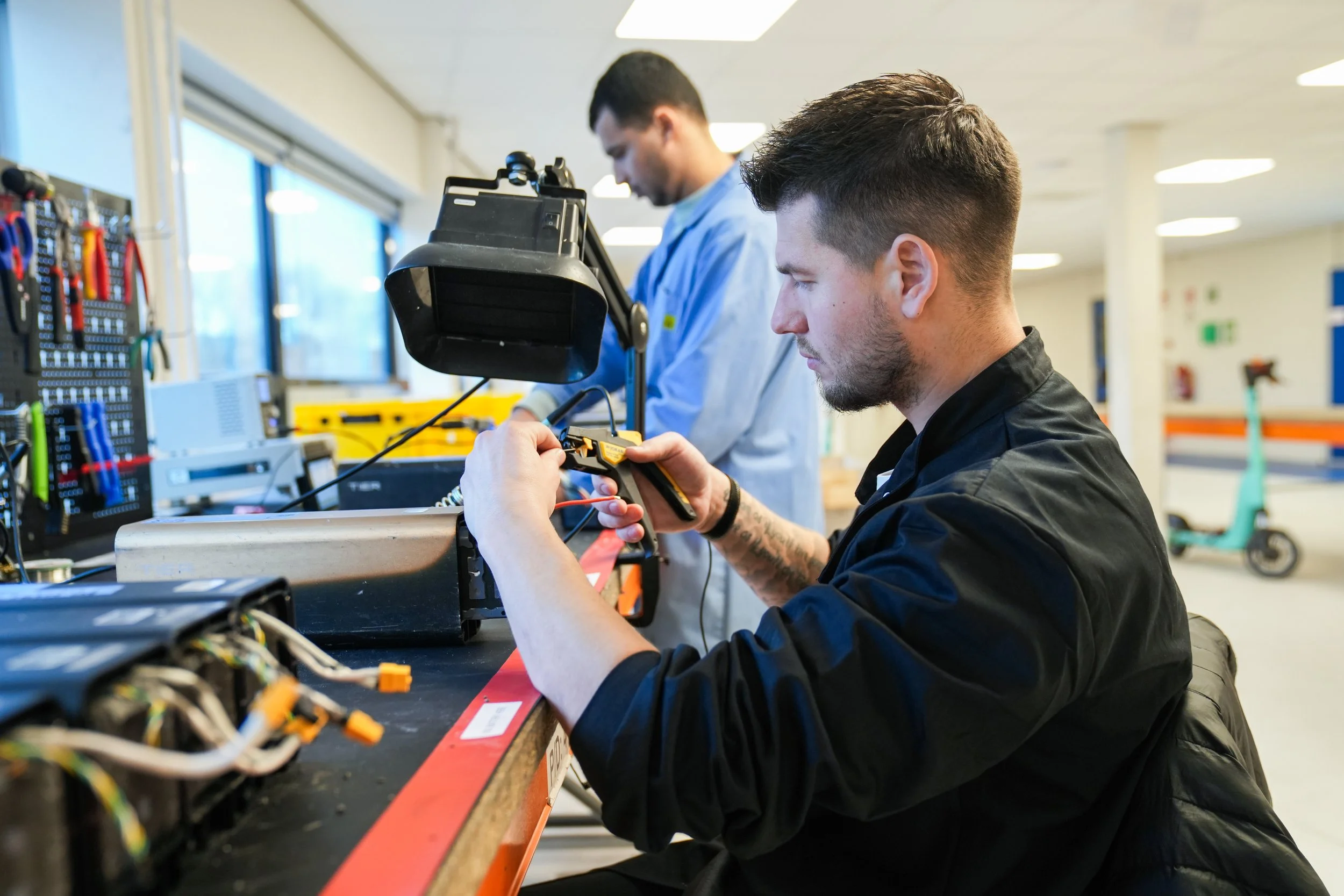
NOWOS repairs lithium-ion batteries using OEM-approved parts and procedures. We maintain full EU compliance as well as UN38.3 and CE standards.
Why repair?
It works. NOWOS repairs batteries at an ~89% success rate*
Save an average of 55% on TCO over a battery's lifetime
Battery lifetimes are extended by 2-5 years
Reduce your product downtime
It’s safe & EU compliant. NOWOS only repairs using original components and OEM-approved processes.
“Together with Nowos, we’ve given thousands of batteries a second life, extending their use and preventing unnecessary waste. This collaboration is a great example of how working with the right partners can create real impact.”
Start your repair pilot.

EU Battery Regulation 2023/1542
Right to Repair
Compliant

ADR Logistics

UN 38.3
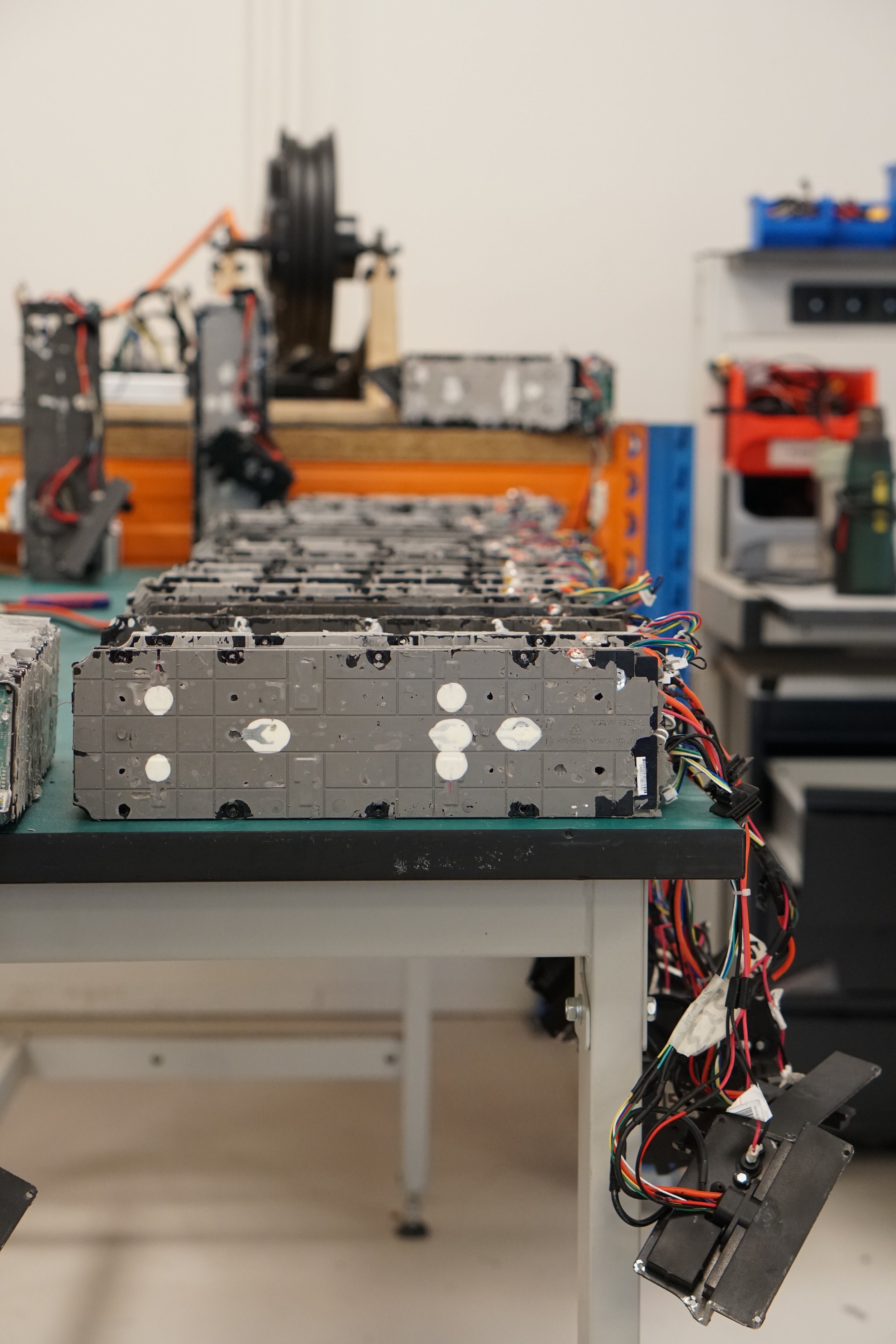
Types of repairs
Not limited to:
Electronics & Logic
BMS Replacement & PCB component repair
Firmware Update
Sensor Replacement
etc.
Mechanical & Housing
Charge / Discharge Port Replacement
Repairing casing damage
Fixing water ingress
Mechanical repairs
Approved re-potting
etc.
Cell & Module Care:
Deep discharge
Cell rebalancing
Wiring harness repairs
etc.
Safety & Validation:
Full performance verification
Power/cycle testing (Capacity, State of Health (SOH))
Comprehensive repair reporting
Quality Control
etc.
A REPAIR-FIRST STRATEGY IS CIRCULAR
REPAIR IS PROVEN
REPAIR IS SAFE AND TYPE APPROVAL COMPLIANT
Single-cell replacement: did you know?
86% of batteries can be safely repaired through mechanical component maintenance, without the need for single-cell replacement.
STUDY (January 2026): 86% of micro-mobility battery failures processed by NOWOS are related to structural (70%) or electronic components (16%).
An analysis of 240.000 diagnostics and repairs performed on batteries sent to NOWOS since 2020 reveals that 86% of micro-mobility battery failures are related to structural (70%) or electronic components (16%), such as casing damage and software locks, rather than the cells themselves.
From the 14% unrepaired batteries, the majority have problems with the complete cell pack. A small percentage has individual cell problems. By replacing only one cell module, though, the other cell modules will often fail due to corrosion.
→ These findings suggest that the majority of batteries can be safely repaired, without the need for single-cell replacement, provided the industry prioritizes accessibility and high-quality design.
HOW WE WORK
-
We first assess any documentation you have such as the UN 38.3, MSDS, any technical sheets
-
With a sample of 5-10 batteries, chargers and tooling we perform a physical repairabiity test on batteries. We look at the time it takes to dismantle and reassemble, availability of spare parts, skills required.
This allows us to provide a repair quote.
-
We discuss together the potential volume of batteries in need of repair on a monthly and/or yearly basis.
-
After agreeing on a Statement of Work outlining all the requirements, we start a pilot batch of repairs and prepare for the next flows.
Start today
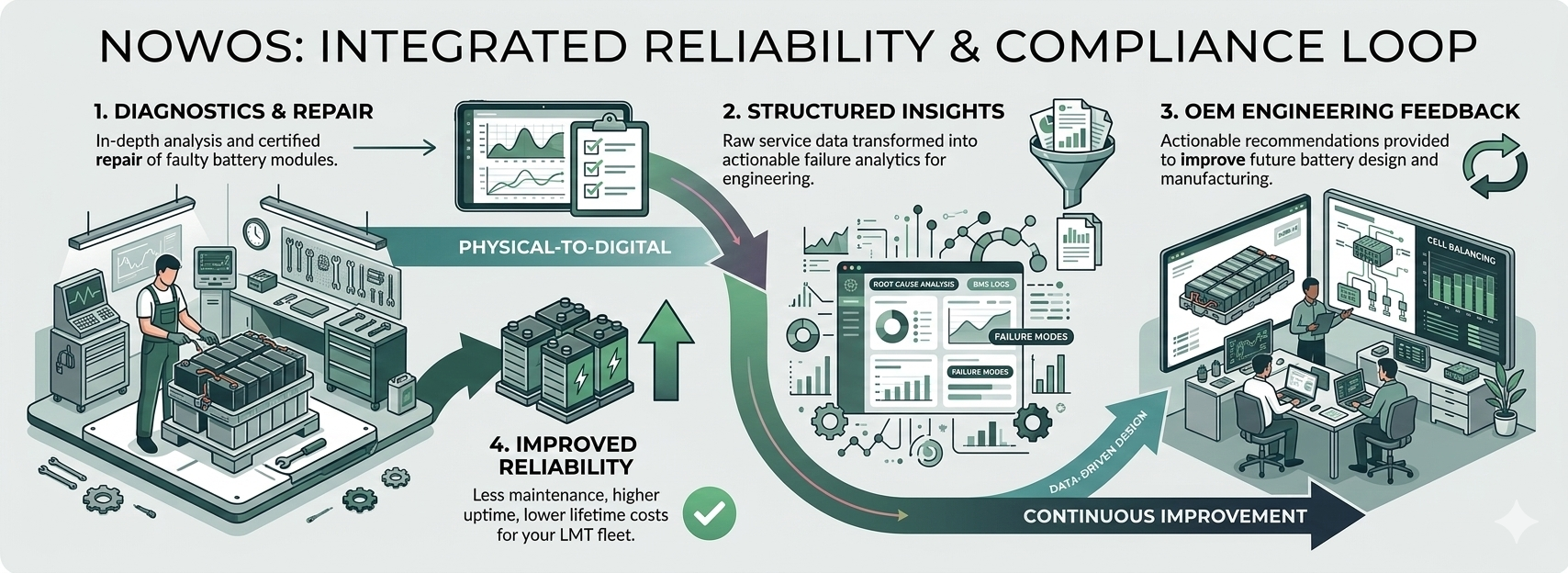
Benefit from a data-backed feedback loop
NOWOS feeds real-world battery failure insights back into product, engineering, and quality teams, helping improve reliability, lower lifetime costs, and support ESG and Battery Passport reporting.
Schedule a call with our team

Sten van der Ham
Chief Commercial Director
sten@nowos.com
+31 (0) 85 130 75 42